
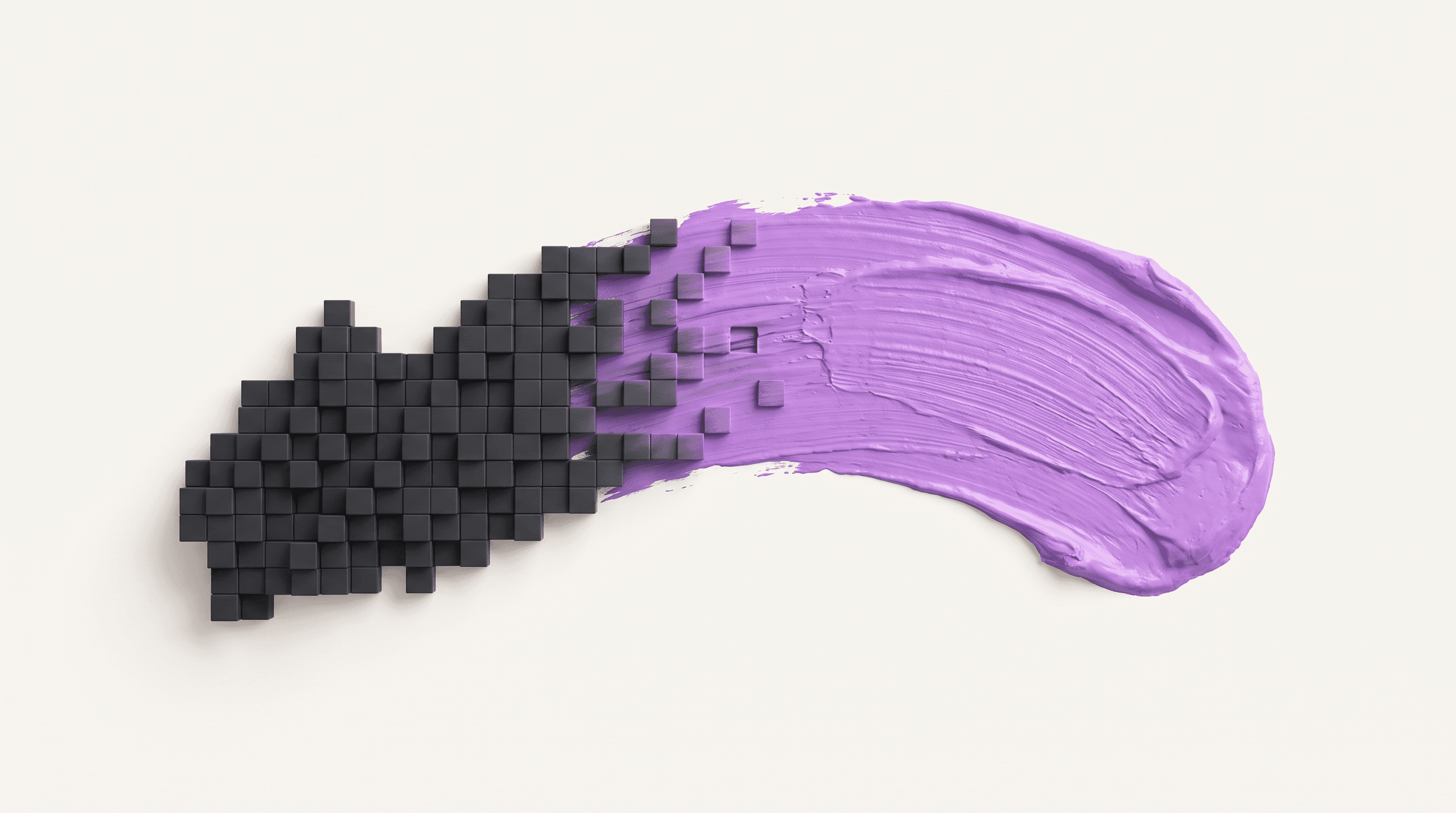
If you've opened a design application, reviewed a marketing campaign, or consumed any digital media recently, there's a good chance artificial intelligence played a role in its creation. The creative industry stands at a fascinating crossroads in 2025, as AI reshapes how we think about design, marketing, and storytelling.
This transformation isn't simply automation replacing human tasks. It's a profound reimagining of what's possible when human creativity merges with computational power.
"We're clearly in one of the most transformational shifts in technology since the introduction of the computer." — Jan Eumann, ECD, Wolff Olins
The Numbers Behind the Shift
According to a recent McKinsey report, 92% of businesses across sectors plan to invest in generative AI tools within the next three years. The AI in marketing market alone is expected to grow at a 26.7% CAGR through 2034, reaching $217.33 billion.
What's most striking is how quickly AI has moved from experimental technology to essential tool. In 2023 and 2024, most creative agencies were using AI primarily for research, ideation, and behind-the-scenes processes. By 2025, AI has stepped into the spotlight, becoming directly involved in creating final deliverables.
AI Moves to the Final Output
Today's designers can describe complex visual concepts in natural language and watch as the software renders them with remarkable fidelity. The quality of AI-generated creative work has improved dramatically — the telltale artifacts of early generative systems (unusual hand configurations, surreal architecture) are largely gone.
"AI is transitioning from being a behind-the-scenes tool for processes and sketches to an actual execution tool, creating brand assets and content in real-time." — Kiser Barnes, Partner & CCO, Red Antler
"AI has deeply embedded itself into everyday design tools, even when you're not actively seeking it out. In Photoshop, for example, you can use the Generative Fill feature to remove, fix, or generate content with just a few clicks." — James Kape, founder, OMSE
The Human-AI Partnership
Despite fears of job displacement, the reality of AI in creative agencies is more nuanced. According to Gartner, 75% of companies currently investing in AI are looking to move their talent into more strategic roles. AI handles the "how"; humans focus on the "what" and "why."
A SurveyMonkey study found that 51% of marketers use AI tools to optimize content, 50% create content using AI to complement their efforts, and 45% use AI tools to brainstorm concepts and ideas. AI is augmenting human writers and designers, not replacing them.
"Advertisers are going to get these controls with AI, meaning that those with the greatest strategic thinking will get the most value. Those who can understand the data and the process behind creating the data will be able to get more value." — Clarke Boyd, founder, Novela
However, the same SurveyMonkey study revealed that 70% of marketing professionals say their employer doesn't provide generative AI training — the gap between adoption and workforce preparation is one of the industry's pressing challenges.
Real-World Examples
Meta launched the AI Sandbox for advertisers — a testing ground for generating text variations, creating images from text descriptions, and automatically adjusting images to fit different aspect ratios. Coca-Cola partnered with OpenAI on the "Create Real Magic" contest, inviting users to combine ChatGPT, DALL-E, and historic Coke ads to make new art.
Nike's "Never Done Evolving" campaign used AI to generate a tennis match between younger and modern versions of Serena Williams, combining footage from her first Grand Slam in 1999 with her performance at the 2017 Australian Open. The meditation app Calm used Amazon Personalize to increase app usage by 3.4% with dynamic content recommendations. ClickUp used SurferSEO to grow non-branded organic traffic by 85% over 12 months.
The Counter-Revolution
As AI accelerates, a powerful counter-movement is emerging. The faster technology advances, the stronger the desire becomes for authentic, human-centered experiences. This isn't a rejection of AI but a rebalancing of technological efficiency with human connection.
"As the world of AI develops, we're leaning into creating more human connectedness through our work. That's something that I think will be more important to brands going forward." — Graeme McGowan, co-founder, Jamhot
After years of digital saturation, brands are investing heavily in in-person experiences. There's a growing appreciation for craft and heritage in design. As Luigi Carnovale, founder of Design LSC, puts it: consumers want unique, handmade items with personal meaning, moving away from mass-produced products — a focus on sustainability that aligns with craft's slow, intentional production.
"More and more, I see younger generations coming full circle, with the pendulum swinging back to a time where real life, genuine, intimate, in-person connection is king." — Miro LaFlaga, co-founder, Six Cinquième
AI Empowering Small Players
One of AI's most significant impacts is the democratization of sophisticated tools. Technologies once available only to large agencies with substantial resources are now accessible to small studios and independent creators — creating what observers call "AI-native small businesses" that compete with established players. A single designer with AI assistance can now create variations and iterations that would have required a team of specialists just a few years ago.
Challenges and Concerns
According to SurveyMonkey, 31% of marketers have concerns about the accuracy or quality of AI tools. Creative professionals must develop skills in prompt engineering and output verification. Salesforce reports that 43% of marketers haven't fully embraced AI tools because they're struggling to get real value from them. AI also raises complex ethical questions around originality, attribution, and bias — responsible AI use requires clear governance.
Nearly half (48%) of marketers believe they may see shifts in strategy or direction as a result of AI technology. Successful agencies are addressing this by adopting flexible, iterative approaches — experimenting with controlled applications while maintaining adaptability.
Where This Is Heading
The next generation of AI tools will seamlessly integrate text, image, video, and audio creation. AI systems will evolve from tools to collaborators, offering suggestions that reflect understanding of brand voice, audience preferences, and campaign objectives. Future systems will develop greater sensitivity to emotional context. Regulatory frameworks will evolve to address copyright, attribution, and responsibility. And we'll see the emergence of specialized AI systems designed specifically for creative applications.
The most successful creative professionals and agencies aren't those who have simply adopted AI tools but those who have thoughtfully integrated them into human-centered workflows. The question isn't whether AI will transform the creative industry — it's how well creative professionals can harness it to create work that not only performs efficiently but resonates deeply with human audiences.

